
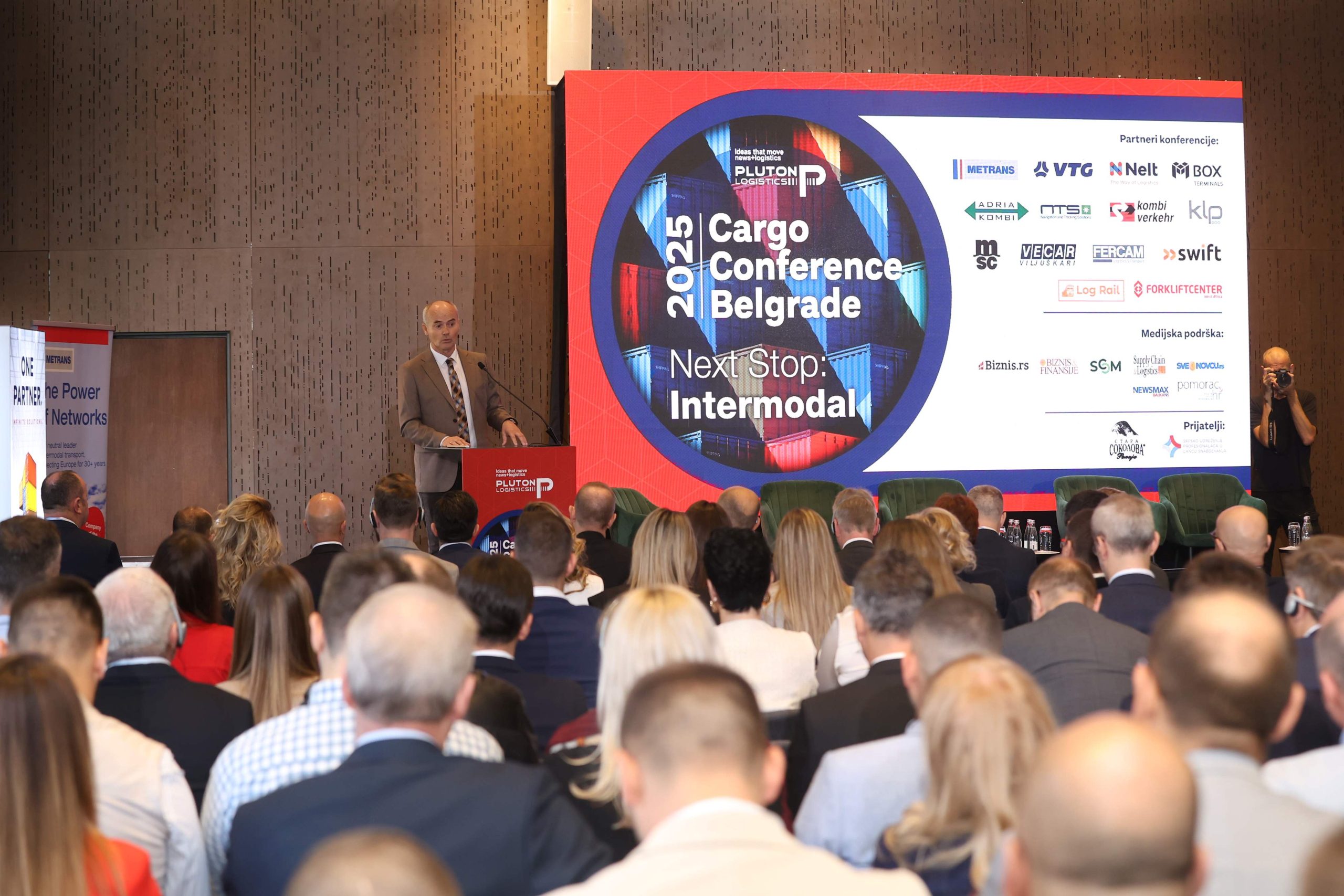
Intermodal Transport Requires Partnership – Cargo Conference Belgrade 2025 Brought Together Companies from 15 Countries
Cooperation is the key to developing intermodal transport: between countries in the region, between road and rail, the state and the economy, and between science and the real sector. This was the main conclusion of the second edition of the now traditional event Cargo Conference Belgrade – “Next Stop: Intermodal.”
In the large hall of the Radisson Collection Old Mill Hotel in Belgrade, on Thursday, October 30, there was not a single empty seat. More than 200 participants from Serbia, the region, and across Europe – from the Netherlands to Turkey – gathered with a clear goal to discuss the future of intermodal transport, its importance for freight flows, the major investments driving Serbia’s market, and the complex challenges that accompany it.
The conference was officially opened by Ljupka Siljanoska, Deputy Director of the Transport Community, who emphasized that intermodal transport is not just about infrastructure, but that it is a bridge to a connected, sustainable, and competitive Western Balkans. She stated that intermodality symbolizes connectivity, cooperation, and sustainability and is a key driver of greener and more competitive regional mobility.
- The 2024 Intermodality Study highlights the underuse of river ports, a lack of investment, and the dominance of road transport, which causes congestion and an imbalanced distribution across transport modes. Achieving the goals of the TEN-T network and the Green Deal requires building new multimodal terminals and modernizing railway infrastructure to link industrial and urban zones with main corridors – Siljanoska underlined.
- Serbia, as a regional hub, is confirming success through the intermodal terminal in Batajnica, showing that smart investments bring tangible results.
In his opening address, Professor Milorad Kilibarda, Dean of the Faculty of Transport and Traffic Engineering in Belgrade, pointed out three key prerequisites for the development of intermodal transport in Serbia: efficient railway operations, a national terminal network project, and an appropriate program of state subsidies or incentives. In a realistic reflection, noting that “the same problems have been discussed for 30 years,” Kilibarda expressed concern that none of these prerequisites have yet been met. However, he also recognized positive signs in the market – the entry of private railway operators who now hold over 55% of the market share, the experience and networks of international companies active in Serbia, and growing private investments in terminals.
One of the major questions raised at Cargo Conference Belgrade 2025 was whether the Western Balkans can become a new axis of European logistics and gain greater relevance in global logistics flows.
Stevica Čarapić, Managing Director of MSC for Serbia, Montenegro, and North Macedonia, and a panelist in “Global Connectivity, Regional Significance,” noted that his company views the region very positively.
- It is very important for us to see intermodal transport developing. What encourages us are the massive infrastructure investments across the countries of the Western Balkans, even though they often mean delays and organizational challenges for us.
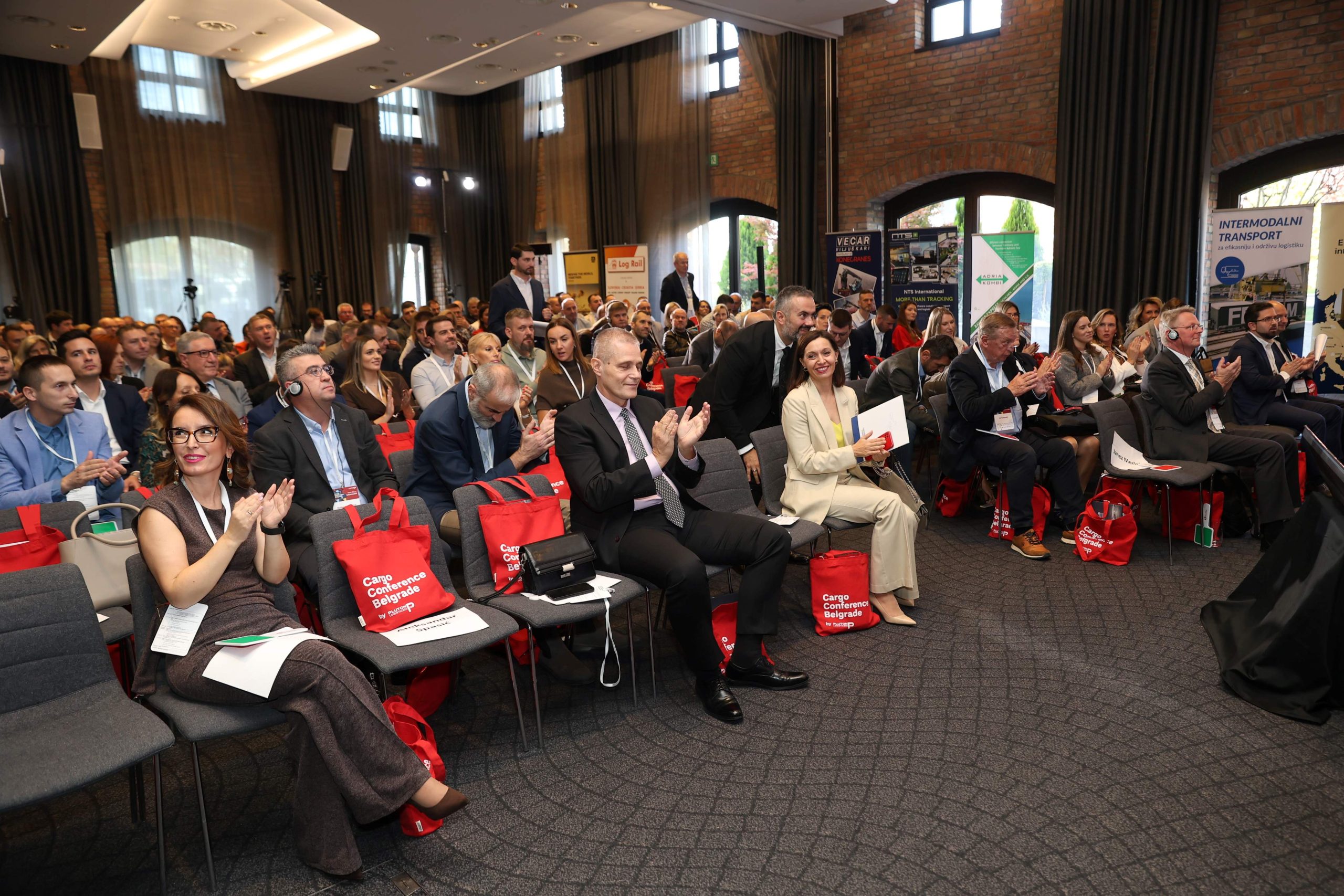
Given that institutional support is essential for progress, participants also found great value in the presentation by Nataša Mirković, Deputy Director of the Customs Administration, on the third panel “Infrastructure, Innovation, and Connectivity.” Mirković reviewed the Customs Administration’s intermodal-related initiatives during last year and announced new automation and digitalization projects that will affect the entire transport industry.
- Our activities in this segment have primarily focused on opening two major terminals – the intermodal terminal in Batajnica, which we made operational by assigning customs officers and launching full customs procedures, not only in transit and supervision but also clearance. Additionally, the opening of the MBOX terminal in Niš last year was a major milestone. We linked that terminal with the Niš Railway Station Customs Office and began conducting all customs procedures there as well – Mirković said.
Emphasizing that the Customs Administration’s main role is to serve the economy, she added that support was also provided in the area of rail freight delivery deadlines:
- The current timeframes compared to Europe range from a minimum of 14 to a maximum of 28 days. However, for national rail transit, we managed to reduce the minimum timeframe within customs procedures to 10 days.
Cargo Conference Belgrade 2025 was organized with the support of sponsoring companies: METRANS, VTG, Adria Kombi, Nelt Group, MBOX Terminals, MSC, FERCAM, Vecar Viljuškari, Kombiverkehr, KLP, Foxit, Forkliftcenter, NTS, and LOG Rail. Media partners included Newsmax Balkans, Biznis.rs, Sve o novcu, scm.hr, supply-chain.gr, Pomorac.hr, and Biznis & finansije, while industry partners included the Serbian Supply Chain Professionals’ Association and the Employee Wellbeing Program. Stara Sokolova provided support for the social segment of the event.
Cargo Conference Belgrade welcomes participants from 15 countries
The organizer of Cargo Conference Belgrade is the specialized media platform PlutonLogistics (part of Pluton Media), which connects professionals in transport, logistics, supply chain, and trade. PlutonLogistics has created numerous innovative media projects and has received multiple domestic and international awards.
As Editor-in-Chief Marija Kambić emphasized, niche media like PlutonLogistics play not only an informative role but also a vital one in supporting the industry and building community.
- We’ve been doing this for 12 years now, and the Cargo Conference Belgrade format, which we launched in 2024, is especially important to us: it is a professional, international conference that brings together only relevant participants and addresses concrete topics using our long-standing expertise. The fact that we gathered 90 companies from 15 countries here in Belgrade today proves that CCB has become an essential meeting point for the transport community in just two years.